Better Decisions, Stronger Growth
Nov 3, 2026
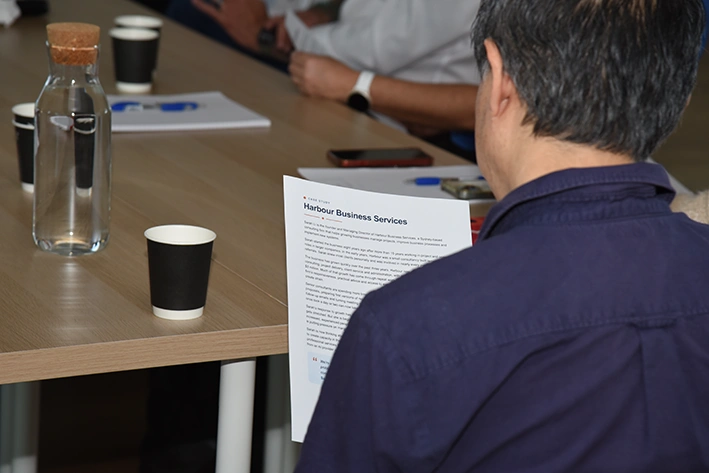
We make hundreds of decisions every day. Most don't need a second thought, but some shape the future of a business. More and more of those now involve AI: whether to use it, where to use it, and who stays accountable when we do.
That's why I teamed up with Anushka Mahindapala from Decision Consulting and Natalie Forbes from CulturePath HR. Together we ran Better Decisions, Stronger Growth on 29 October as part of NSW Small Business Month.
Each of us brought a different lens: I brought the customer lens, Natalie the people lens and Anushka the finance lens. Good business decisions need all three. A choice that looks right on a spreadsheet can still fall flat with customers or ask too much of your team.
Whether you're a sole trader or employ 200 people, the big decisions often rest with the founder or a small team. Even large organisations struggle: Deloitte's 2026 Human Capital Trends reports that 57% of organisations operate at low decision-making maturity, even as 60% of executives now regularly use AI to support their decisions. The lesson applies to any leader: using AI more doesn't automatically mean deciding better. A reliable framework doesn't replace your judgement. It gives it structure.
Our framework pressure-tests decisions through the customer, people and finance lenses, and asks one question that sharpens everything: what value do I want to create?
Anushka has written more about the framework. In Before You Invest in Your Business: What Do You Actually Know?, she shows how to weigh a big investment through the customer, people and finance lenses. You can also read my earlier post on deciding about AI.
What we heard about AI
We had a diverse room of business owners, from health to professional services. Matt Shield, Business Concierge at Service NSW Business Bureau, joined us too.
Nicolette Boele MP, Member for Bradfield, recorded a video message of support for attendees and small business owners. Her message was clear: the community wants a real person to be accountable when a machine makes a decision that affects them. You can watch her message here: https://www.facebook.com/reel/1110977705154567
Her report, On Our Terms: Artificial Intelligence in Bradfield, shares more of what she has heard from the community about AI.
It isn't just Bradfield. In the OAIC's 2026 privacy survey, 81% of Australians said they want the right to have an AI decision reviewed by a human, and 79% want to be told when AI is being used.
The same applies to small business. If you use AI in decisions that affect your customers or your team, someone in your business needs to own the outcome.
That matched what we heard in the room. Whether AI is right for your business depends on your customers, people and finances. Questions raised on the day included:
Do your customers want a human experience?
Do your people need different skills to use AI responsibly and effectively?
Does it have to cost a lot?
Can you start small and pilot it without risk to your people or customers?
My insight: good decisions need the right culture and governance
A framework helps, but only in the right environment. My biggest insight from the event is that good decisions depend on culture and governance as much as on the person making them.
Culture decides whether people speak up. Psychological safety isn't a values statement or an invitation to speak up. It's created by what happens when people ask unexpected questions, disagree, raise concerns or fail, and by whether poor behaviour is challenged or allowed to continue. When people feel safe, decisions get tested from every angle. When they don't, the founder or manager carries every call alone, and that's where decision fatigue sets in.
Governance is a leader's job. Leaders set out who decides what, what evidence a decision needs and who is accountable for the outcome. That matters even more with AI in the mix: people want a human who owns the decision. And human oversight has to mean more than simply signing off on an automated recommendation.
In practice, good governance, especially with AI, includes:
A consistent decision framework, so significant decisions are defined, measured and tested through the customer, finance and people lenses before they're approved.
A clear AI use policy, shaped by the leaders closest to the work. In marketing, for example, AI is now built into the very platforms we use every day, so marketing leaders need a say in the policy.
A feedback loop to leadership, so what's learned from using AI, pilots and feedback reaches the people making decisions.
Change management and training, so people understand what's changing and why, with tailored training based on real skills gaps and the budget to support it.
How I make decisions, and help others make theirs
A big call in my career was to challenge an existing marketing strategy and technology implementation as a relatively new recruit, then lead a new direction. I put customer insight first, focused on channels we could measure, and adjusted the system to track the journey from lead to sale. I designed the team so skills and roles matched the strategy. Contribution to pipeline grew and costs fell. Just as importantly, team members were trained and progressed in their careers.
Leadership was open to being challenged, which is the culture I described earlier, and I used that opening. It also reflected how I decide: start with the customer, gather the best evidence available, then make the call and stand by it. Sometimes the right call is to wait, when there's too much change for the team at once, or not enough evidence to show that proceeding is worth the risk. Either way, I explain my reasoning, make sure others own their part, and learn from what happens next.
Helping others decide starts with listening. I check what the person needs from me, whether that's a sounding board, a challenge to their assumptions or a clear recommendation. In coaching teams and students, that has ranged from helping someone choose a career path to building the commercial acumen and leadership skills they need to make good decisions themselves. Whatever the need, the decision stays theirs.
Working with Anushka and Natalie showed the same thing. We started out almost as strangers, and with respect, transparency, patience and some laughs, we made dozens of decisions together. Now I have two trusted people to test my thinking with, and that's what I want for every small business owner.
Your next decision
Have a framework you trust. Have people you can turn to for different kinds of decisions. Then make the call with what you know.
The event also reminded me how much I love training, building on decades of developing teams, facilitating workshops and designing learning for change. So I’ve made a decision of my own: I’m formalising it with a Certificate IV in Training and Assessment, due early in 2027, so I can keep helping leaders, teams and businesses grow.
If you'd like to learn the full framework at a future session, register your interest here.